Deep Space and the Deep State
UFOs, UAPs and UBS

In Spring 2019 the journal Issues in Science and Technology, an organ of the National Academies of Sciences, Engineering and Medicine, published an article entitled, "UFOs Won't Go Away". Claims of UFO sightings, and of government efforts to conceal them, began in the era of modern aviation following World War II. They are still gathering steam, firing on all cylinders... and full of hot air.

Yes, by remarkable coincidence, after 13.5 billion years of cosmic expansion, 4.5 billion years of terrestrial existence, and 2.5 billion years of evolution, the aliens arrived just as we were learning to fly. Great timing on their part, considering how many centuries a trip from the nearest inhabited planet (if any) would take. Or, great illusion on our part - to me, this is enough of an argument that "UFO" (Unidentified Flying Object"), and its modern cousin "UAP" ("Unidentified Anomalous Phenomenon") are "UBS" (Unmitigated Bull Shit).
This is a vast subject, and without doing yet another series (I have already promised one on AI) I can barely scratch the surface. I have been researching and working on it for more than two years, and I expect a book of some sort to be the outcome. But I can tell you right up front what I think:
1) There are no populated interstellar aircraft anywhere in the vicinity of our solar system, and there never will be. (Nor are we going to any other planet from here... sorry.)
2) It is extremely unlikely that there are any unpopulated, or merely robotic, interstellar aircraft anywhere in the vicinity of our solar system, or ever have been or will be.
3) It is highly unlikely that there are aircraft representing advanced scientific technologies that U.S. military and civilian scientists know nothing about anywhere in the vicinity of U.S. airspace.
There, now you don't have to read my book, if I ever manage to publish it. Unless you want the details. But I can even summarize some of the details:
1) Given what we know about the origin, size and laws of the universe, the nature of life and biochemistry, as well as ordinary psychological and social observation, if there is more than one intelligent civilization in the universe the distance between them would be so immense that it would takes hundreds, thousands or millions of generations to navigate between the closest habitable planets. Science as well as cinema may be abuzz with talk of wormholes, warp drives and superluminary (faster-than-light) travel, but there is zero evidence that such phenomena can exist above the level of quantum interactions, and one VERY big reason to think it is impossible, to wit, Einstein's special theory of relativity, which says that nothing can exceed the speed of light.
2) The distances and travel time are so great that it is extremely difficult to conceive any benefit whatsoever to a civilization in sending robot-controlled spacecraft off on a journey to spy on other planets. Once it got where it was going, messages travelling back to the planet of origin would go no faster than the speed of light. The closest star system to us is already 4 light years away; the closest one with an advanced technological civilization, if any, would be orders of magnitude farther away, meaning that even a message (to say nothing of a return trip) would take thousands or millions of years to get there. Moreover, the likelihood of a spacecraft travelling that distance and surviving intact to carry out advanced technological feats is vanishingly small.
3. Since at least the 1960's, that is, the beginning of the space program, every technically advanced nation is monitoring weapons and aeronautical capabilities of every other nation. Even if they weren't, great scientific breakthroughs do not happen in a vacuum, they come at the tail end of scientific theory and experiment that is known to some degree throughout the international scientific community. When Russia attacked Ukraine with a hypersonic missile, the first one ever used in combat, it was shocking that allegedly mighty Russia had to deploy its most advanced military technology to try to subdue its smaller, weaker neighbor; but no one was shocked that it had mastered hypersonic aeronautics, which has been under development for years. (Even India has hypersonic aircraft.) Yes, there is an arms race, and someone will get to each major milestone first, but there is no such thing as a completely new form of propulsion, like that which was supposed to have been exhibited by UFOs observed by Navy pilots aboard the S.S. Nimitz, based on novel principles known only to our adversaries. And if there were, why would they be so dumb as to risk one failing over our territory, or being shot down (like the Chinese spy balloon) in a non-combat situation?
So that is enough of the details, and I'm pretty sure I can back all of them up. Go ahead and calculate the time dilation benefits of space travel (time moves more slowly for the space traveler as they approach the speed of light) - it won't help much until you manage to send a spaceship out at 99.99% the speed of light. Good luck with that. There are so many reasons to dismiss the idea of extraterrestrial visitation that in spite of the ongoing flurry of discussion it still belongs on the lunatic fringe.
Much of the silliness on the theoretical side of the discussion has been the result of a certain consequence of Einstein's general theory of relativity. The theory results in a set of "field equations" whose solutions describe the geometry of spacetime (and therefore the nature of gravity). These equations have many solutions, and some of the solutions permit acceleration greater than the speed of light. That doesn't mean those solutions describe a possible universe, though. Imagining that they do has created high-level entertainment for plenty of physicists (look up "Alcubierre drive" or "Krasnikov tubes" for example). Even photons (the particles that light actually consists in) can travel faster than "the speed of light" - for a distance less than the diameter of an atomic nucleus. There are lots of strange phenomena in phsyics, but doing what Dr. Sulu does in Star Trek, or Dr. Arroway in Contact - sending a populated spaceship through a wormhole or time warp - is going to stay in the realm of fiction, not physics.
You might be curious why I am so interested in this. I studied astronomy and physics for a couple of years at Northwestern University, and when I got there the Chairperson of the Astronomy Department was none other than J. Allen Hynek. Yes, that Hynek - the guy who coined the term "close encounters", of the 1st, 2nd and 3rd kinds, and who was once famously accused of dismissing some alleged UFO observations as "marsh gas". (He only suggested it as a possible explanation.) I also took an astrophysics course with a professor named Su-Shu Huang. He is the scientist who established the idea of a "habitable zone", the area near a star where water would neither freeze nor evaporate, thus making a planet that contained it a potential habitat for life. (For someone who cannot claim the credentials of an astronomer or physicist, I have pretty good pseudo-credentials!)
I had already read Intelligent Life in the Universe, the book by I.S. Shklovskii and Carl Sagan that attempted a scientific analysis of the possibility of extraterrestrial civilizations, and I was completely convinced that it existed. The concept had already been formalized by astronomer Frank Drake in the so-called "Drake Equation" which offers a way of estimating the number of civilizations we might be able to contact.
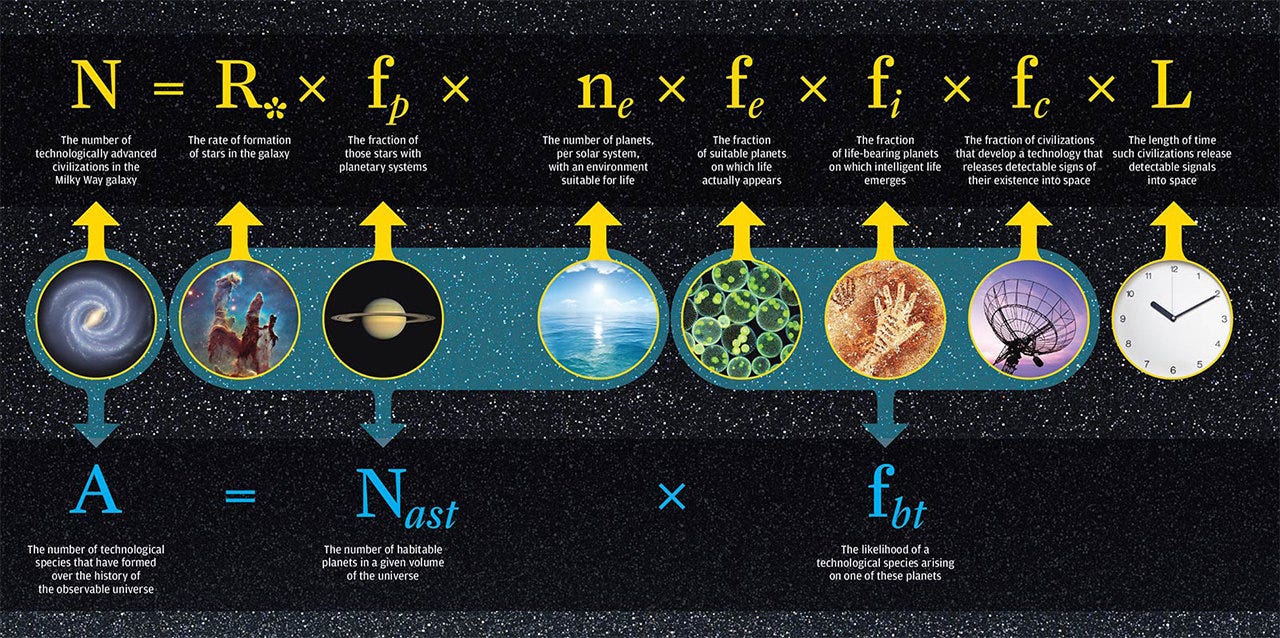
I'm no longer so convinced that there are any other intelligent beings out there. Peter Ward and Donald Brownlee's 2000 book Rare Earth: Why Complex Life Is Uncommon in the Universe argues otherwise. It was jumped on by some creationists as vindication of "intelligent design", and scientists have pointed out some flaws in the argument, but I believe they demonstrate that it takes a rare set of conditions for life to evolve, that not many planets will meet these conditions, and that if they do it is still unlikely that the outcome will be a technological civilization. All our SETI (Search for Extraterrestrial Intelligence) efforts may be akin to the last person on earth trying to make a phone call.
In case you have not gotten a whiff of the latest chatter on UFOs, it comes, as usual, from someone in the military: David Charles Grusch, "a veteran of the National Geospatial-Intelligence Agency (NGA) and the National Reconnaissance Office (NRO)" who also served as liaison from those agencies to the military's Unidentified Aerial Phenomena Task Force. He provided classified documents to Congress and the Inspector General for Intelligence that he claims contain proof that alien spacecraft have been found. Shades of the Roswell Incident!
The idea that the government or military is hiding something from us in its various studies of UFOs is an old one, and it usual comes from someone in the military who claims to to have inside information. Donald Kehoe was one of the first of this sort, a Marine Corps Major who insisted back in 1950 that the feds were hiding information about flying saucers. In 1978 Lieutenant Colonel Jesse Marcel, who had initially been assigned to investigate the Roswell debris, threw gas on an already debunked fire claiming that the debris was extraterrestrial. Luis Elizondo, a former low-level defense intelligence officer who resigned in 2017, is another self-styled whistleblower; he shows up in just about every extraterrestrial-related program from entertainment companies like the To the Stars Academy (run by rock star Tom DeLonge) to Harvard University's "Galileo Project". More recently Chris Mellon, Deputy Assistant Secretary of Defense for Intelligence under President Clinton, got into the same act.
If you feel there's something a bit screwy about these "deep state" characters complaining about the state's malfeasance, it will not come as a surprise that efforts to push for more government UFO investigations (with taxpayer money) have come from the likes of Marco Rubio and Matt Gaetz. Tennessee Republican Tim Burchett has said explicitly that he believes the government has found alien UFOs. The Conspiracy Party nevertheless has no monopoly on the wish to spend taxpayer dollars investigating what has, so far, turned out to be visual noise, drones, weather balloons, revolving lighthouse beams... and maybe marsh gas. Democrats from Harry Reid to Kirsten Gillibrand have jumped on the bandwagon. They may be less inclined than Republicans to expect Ray Walston to show up on Air Force radar, but they seem to be ready to "go with the flow on UFOs".
Ross Douthat, commenting on Grusch, proposes that "there is clearly now a faction within the national security complex that wants Americans to think there might be alien spacecraft, to give these stories credence rather than dismissal." That's one way of looking at it. The other way is that paranoia over national security is so high that even ordinarily sensible people are more frightened of being the skeptic who was proven wrong than the believer who gets ridiculed. Consider the fact that one errant Chinese spy balloon, and a handful of other objects that were likely no more exotic, has the whole government running around in circles trying to figure out what to do and what to say. Shoot it down, follow it around, capture it for study... My advice is let it go: all you have to do is click your heels three times and you get the same effect.

Distrust of government statements over what are now referred to as UAPs is not totally unwarranted. At any given time the military has aeronautical vehicles under development, like the U2 spy plane, the Stealth Bomber or hypersonic aircraft, and even though they are in no way "anomalous" from a scientific point of view, they are kept secret, and they may be observed during testing doing things that look unusual to people not familiar with the technology. Such programs led to the Roswell Incident and perhaps many other putative alien UFO sightings. The existence of a secret Pentagon UFO study, initiated by Senators Harry Reid (D-NV) and Ted Stevens (R-AK), was revealed in December 2017 by Politico and the NY Times. It included some fuzzy radar images of UAPs that appeared to perform aerial maneuvers that would be physically impossible for normal aircraft. It was also reported that a helicopter landed on the Nimitz after the incident and demanded that the ship hand over all radar logs and other evidence, then disappeared with it.
But the Pentagon says the study was ended, with Reid's approval, for lack of any concrete evidence of aircraft that could present a security threat, terrestrial or otherwise. And in spite of all the recent bruhaha, the Pentagon still says it has not found a single instance of possible alien aircraft. A NASA panel says the same thing. That sounds like a wrap. But it's not going to stop the UFO craze, which has by now resulted in an ever-expanding list of study groups, research projects, conferences, publications and the like.
Indeed, we cannot even give a pass to the scientific community on this. Consider that until recently NASA did not think UFOs were a dignified enough topic to warrant investigation at all; now they run study projects. The notion of extraterrestrial visitors was a topic for TV dramas (The Invaders) and sitcoms (My Favorite Martian), sci-fi novels (Stranger in a Strange Land), films (ET) and books promoting conspiracy theories. The search for signals from alien civilizations was relegated to the SETI group, the Rodney Dangerfield of astronomy. What has happened is that conspiracy theory, or at least wild speculation, has been dignified by adding the word "scientific" and a few equations to the "investigations".
Indeed, Ufology, as it is sometimes called, has found its way to the very center of the scientific establishment: Avi Loeb, Chair of the Astronomy Department at Harvard University and an astrophysicist who claims to have published more than 700 scientific papers, has become the leading edge of respectability for claims that extraterrestrial visitation has already occurred.
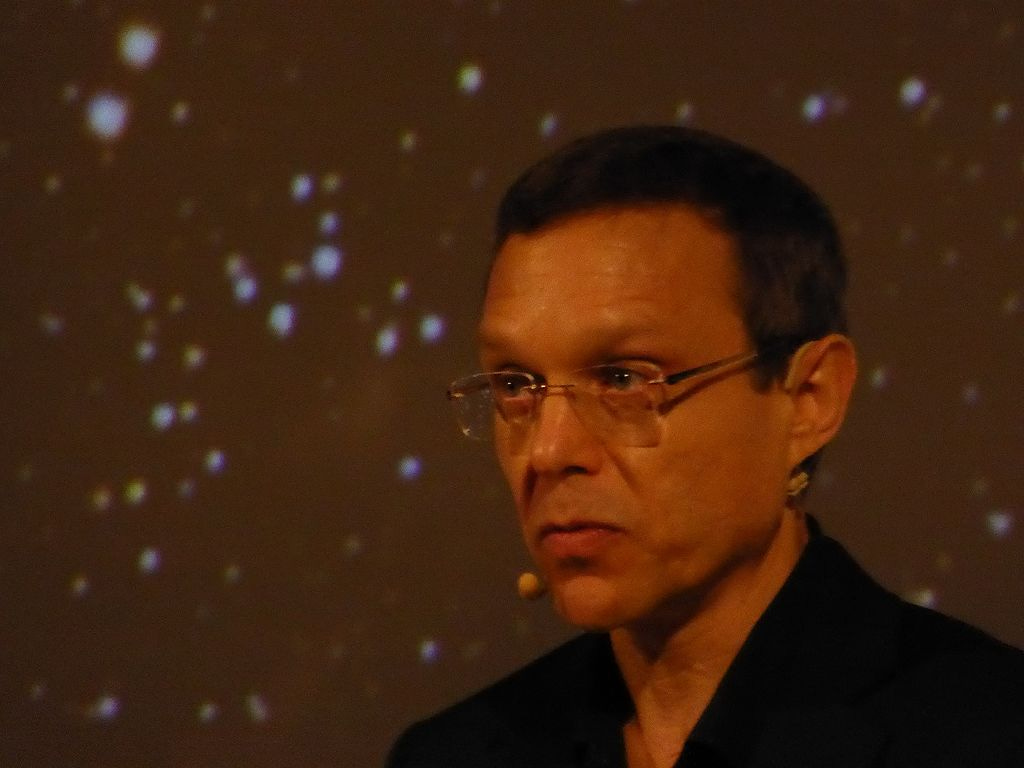
Loeb heads up Harvard's Galileo Project, a group that includes numerous scientists and claims to be looking for signs of alien presence. He is also the leading astronomer with Breakthrough Starshot, a privately (read: tech billionaire) funded project to use light-powered sails (lightsails) to send a microchip to the Proxima Centauri star system. His name shows up everywhere: he is cited in newspaper reports, gets congratulated for publishing papers on UAPs by the so-called "Scientific Coalition for UAP Studies" (a group that appears be an association of rank amateurs), Scientific American devotes an article to him under the title, "Astronomer Avi Loeb Says Aliens Have Visited, and He's Not Kidding".
Having just read Loeb's book 'Extraterrestrial: The First Sign of Intelligent Life Beyond Earth, I have to insist that he must be kidding, even if he says otherwise. The book concerns 'Oumuamua, an interstellar object that passed through the solar system in October 2017. (The diacritical mark before the name is due to the fact that it is a Hawaiian word meaning "a messenger from afar arriving first".) It was briefly tracked by astronomers, and exhibited some odd characteristics. In particular, it accelerated as it came close to the sun, which comets typically do, only 'Oumuamua did not show signs of "outgassing" - burning off fuel - which is what explains the acceleration of comets. It was also apparently long and narrow, an unusual shape for a wandering space rock. Loeb's conclusion: it was a lightsail, sent by another civilization.
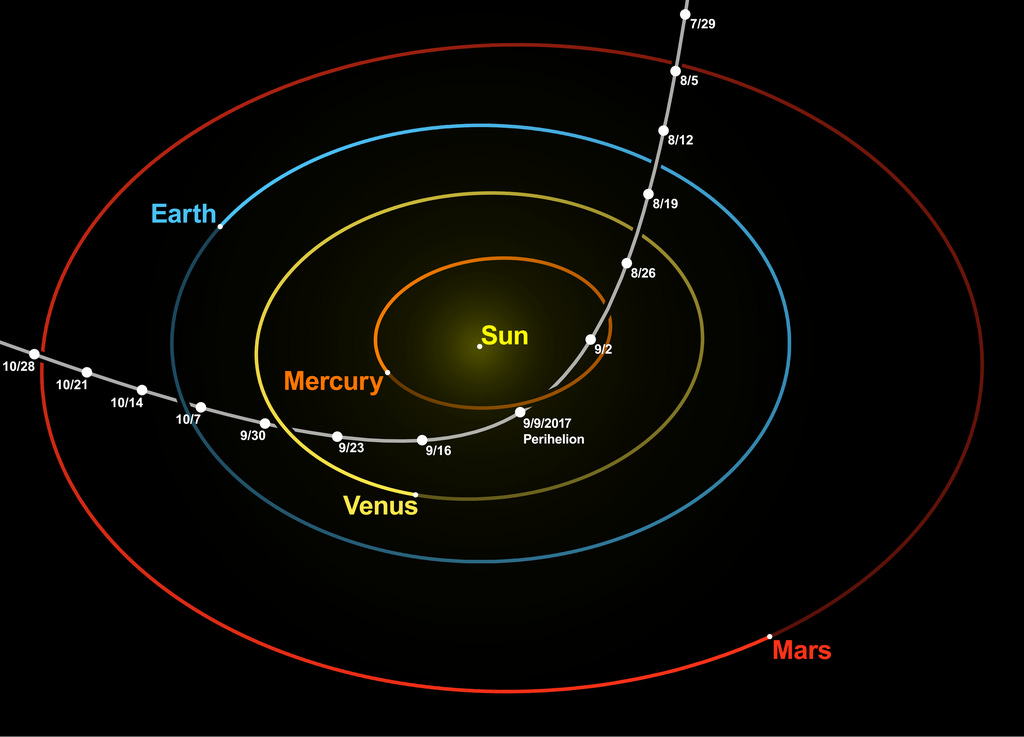
Loeb considers this hypothesis an example of the principle of "inference to the simplest explanation", which has been held dear by philosophers of science for more than a century. Unfortunately, there is nothing "simple" about an extraterrestrial civilization sending a lightsail here; when you consider all the assumptions it requires, it is more like inference to a fantastically unlikely idea. We don't know what caused 'Oumuamua to accelerate, or why it is shaped that way; but the idea of an alien spacecraft cruising by our itsy bitsy corner of the galaxy, in its miniscule corner of the universe, is improbable to the nth power. If it got here randomly it would be an insane coincidence, given how few intelligent civilizations are likely to exist in a huge cosmos. If it was targeted we want to know how they found us and how they managed to navigate a spacecraft so close to us from thousands or millions of light-years away.
Loeb is now pointing his telescope in the opposite direction: he plans to try to dig up an object that crashed into the Pacific Ocean in 2014, claiming that it, too, was an interstellar emisarry, perhaps hoping to find alien fingerprints on it. There are good scientific reasons to examine any cosmic debris that falls to earth, but what Loeb is selling is a sensationalist form of science, and he's doing it under the auspices of Harvard. This is not encouraging.
What operators like Loeb and Elizondo (who has now joined the Galileo Project), journalists like Leslie Kean (who harps endlessly on the subject of UFOs), and conspiracy theorists like Bob Lazar or Steven Charles Hirschfeld (whose book on 'Oumuamua is listed along with Loeb's on Amazon) have in common is that they insist we take it as a serious scientific hypothesis that extraterrestrials have visited this planet. I am not drinking that Kool-Aid. I think it is unscientific rubbish whose claim on our intelligence is similar to the claims about god having direct causal powers in our daily lives: because it is impossible to completely disprove, people are free to let their imaginations wander. That does not constitute science.
What if we worry a little more about the numerous ways we are threatening to make ourselves extinct, and a lot less about others coming trillions of miles across the universe to study us while we do it? Are they hoping to migrate here after we destroy the ecological systems that allowed us to survive in the first place? What will they get for it - a world of diminishing coastlines, with plastics from Mt. Everest to the Mariana Trench, enough nuclear waste to irradiate the entire planet, and a hole in the ozone layer? Maybe this is why we haven't found any evidence of aliens yet: they took one look and went home.
"The notion of extraterrestrial visitors was a topic for TV dramas (The Invaders) and sitcoms (My Favorite Martian), sci-fi novels (Stranger in a Strange Land), films (ET) and books promoting conspiracy theories."
Don't forget one of the best episodes of Twilight Zone: "To Serve Man." And then there is its opposite, the film "The Day the Earth Stood Still."
And in that vein, perhaps the most "relevant" (to our current geopolitik) of the alien-based TV dramas was "V," a mini-series that spawned a full-on TV series. In this brilliantly executed work, a very human-looking alien race comes to Earth offering advanced scientific and medical knowledge, assistance, etc. You know, the "benevolent" type. We soon find out that they are actually quite literally lizard-people and are full-on fascists and put humanity under their webbed boot. They are here primarily to steal the water (according to sci-fi broadly, water is always "the rarest commodity in the universe," and there are dozens of short stories, novels and other sci-fi in which this concept figures, often prominently).
I see two possible reasons why aliens (if they exist and have technology advanced enough to travel between planets and galaxies) have not "shown themselves" openly. The first is that we are simply uninteresting to them; not just not very advanced, but completely self-destructive. Why invade if they can just wait until we destroy ourselves? The second is that, due to our lack of (comparative) advancement, we have nothing to offer them.