Is 2023 the new 2016?
It's Not a Very Good Year for Rock Stars

Taking a breather before my final post in the "Race and Police Violence" series, which gives me the opportunity to ask that musical question....
Is 2023 the new 2016? You know what I'm talking about, right?
Okay, you probably think I'm concerned that Donald Trump will declare himself President from jail, and his Brown Shirts, I mean ardent followers, will storm Rikers Island and declare a new National Socialist republic? No, not really losing sleep over that. But, as if the election of Trump were not enough to make 2016 a challenging year, rock stars began dropping like flies. Whether these two things were related I can't say. Perhaps the dearly departed had simply listened to Dark Side of the Moon once too often and decided to "race towards an early grave".
Whatever the reason, on January 10th we lost David Bowie, who had just declared himself a "blackstar", and on April 21 Prince checked out. Neither one was so advanced in age that we might have anticipated it. They were joined at the pearly gates that year by Glen Frey, Paul Kantner, George Martin, Nana Vasconcelos, Keith Emerson, Merle Haggard, Alan Vega, Glen Yarbrough, Oscar Brand, Don Ciccone (The Critters), Jerry Corbetta (Sugarloaf), Bobby Vee, Leon Russell, Mose Allison, Greg Lake and many others.
There were dark ironies as well: of all the people to go to that Great Gig in the Sky on Christmas Day, the powers that be picked George Michael, giving a new meaning to the title "Last Christmas". He went hand in hand with Alfonse Mouzon, one of the great fusion drummers, who I saw in a mind-blowing performance with Larry Coryell and the Eleventh House in 1973 or '74. To make it even more personal, Roye Albrighton of Nektar, one of my guitar heroes, also said goodbye - I was fortunate enough to have seen him at least four times starting (I think) in 1974.
The pandemic took down a few musicians, including folk icon John Prine,
who had previously beaten lung cancer (and who, incidentally, was much admired by Roger Waters of Pink Floyd, the subject of my previous post, as well as by Bob Dylan and many others). Adam Schlesinger of Fountains of Wayne died at only 52; Joe Diffie, Charlie Pride, Trini Lopez, Phil Spector and Meatloaf also succumbed to the disease.
The pandemic took down a few musicians, including folk icon John Prine, who had previously beaten lung cancer (and who, incidentally, was much admired by Roger Waters of Pink Floyd, the subject of my previous post, as well as by Bob Dylan and many others). Adam Schlesinger of Fountains of Wayne died at only 52; Joe Diffie, Charlie Pride, Trini Lopez, Phil Spector and Meatloaf also succumbed to the disease.
But this year is the bad news is rolling in on an all but daily basis. It's barely April, and the toll already includes David Crosby, Jeff Beck, Robbie Bachman, Lisa Marie Presley, Tom Verlaine, Burt Bachrach and Wayne Shorter.
That's a bad start, and it's just the beginning. I'll assume you know who those people are. But there have been a lot of important musicians with less name recognition who met them at the pearly gates. On March 5th Gary Rossington, guitarist a co-founder of Lynyrd Skynyrd passed away. Clarence "Fuzzy" Haskins, founding member of Parliament/Funkadelic, died on March 17.
A bunch of significant musicians went way before their time. Lisa Marie was gone on January 12 at age 54. Trugoy the Dove, bassist and co-founder of iconic hip hop group De La Soul, went the way of all flesh on February 12 at age 54. Steve Mackey passed away on March 2nd; he helped make Pulp into one of the top Britpop bands. (Okay, so there are only 2 other Britpop bands - the similarly named Blur, and some other group whose name reminds me of a desert - can't quite remember it but they once claimed to be the 7th most important band of all time.) For them and a few others the obituaries give little in the way of a cause of death - "after a long illness" etc. It's a high-risk profession.
The death of drummer Jim Gordon came on March 13. A member of the group of studio musicians known as the Wrecking Crew, he recorded some of the most important albums of the 1960's, including the Beach Boys' Pet Sounds. Then he went on to play with a stunning list of musicians in the next decade, including John Lennon, George Harrison, Eric Clapton and Stevie Winwood. He also wrote (or co-wrote) the instrumental ending of "Layla", the Clapton hit that provided much of his income when he became afflicted with schizophrenia. (Rita Coolidge, his partner at the time, is considered by some to have be a co-writer.) Eventually, under the influence of hallucinations, he killed his mother and was sent to prison, where he died. Kind of both burned out and faded away.
Jerrold Laurence Samuels may not be anyone you've heard of, but if you were a kid when these rock stars were famous you might remember Napoleon XIV. His wacky single "They're Coming to Take Me Away Ha-Haaa!" was backed with the even more loopy "!aaaH-aH ,yawA eM ekaT oT gnimoC er'yehT" - the deranged song played backwards. (The B side has not even been uploaded to YouTube - but I still have the single so if I get the urge I'll be sure to let you know.) Talk about one-hit wonders! It was eventually banned by many stations after doctors and mental health advocates objected. Samuels was taken away on March 10 at age 84.
Particularly sad for me was the death of Ray Shulman on March 30. He was one of three brothers who founded Gentle Giant, a progressive rock group like no other. Ray, Derek and Phil, all of them multi-instrumentalists, performed some of the most technically sophisticated rock music ever, while giving their varied compositions plenty of accessible hooks. On albums like Octopus, A Free Hand, The Power and the Glory and In a Glass House they powered through classically-informed rock, knocking out difficult vocal harmonies while playing extraordinarily complex instrumental parts on a variety of instruments. No mere studio band, they did all this stuff on stage as well: (Shulman is the bass player)
Do I need to say how difficult it is to pull off this kind of ensemble playing? For their combination of musical sophistication and technical chops they had few peers among rock groups: King Crimson comes to mind, Yes at their peak, perhaps the contemporary jazzrock group Umphrey's McGee - I can't think of any others offhand. Even though it's been a long time since the Shulmans made music together it's pretty hard to see an essential member of the band say goodbye.
Apart from the musicians themselves, some people equally central to rock history have signed off. One of them was Keith Reid, lyricist and official band member in Procol Harum, kicked the bucket on the 23rd. Like Robert Hunter (Grateful Dead) and Pete Sinfield (King Crimson) he wrote lyrics as poetry, or vice versa. The trend was started a few years earlier by Bob Dylan, of course, but it had not penetrated the pop charts much until Reid penned "A Whiter Shade of Pale", its opening line a takeoff on the enfant terrible of English poetry, John Milton.
Released May 12, 1967 (the same day as Jimi Hendrix's game-changing Are You Experienced?), the song, along with The Doors' "Light My Fire" (released 3 weeks earlier) challenged the limits of the pop radio format, anticipating the headlong rush into acid rock. (Oddly enough, hardly any of the epochal acid rock albums of 1967 were released during the "Summer of Love", but rather before or after. But I digress.)
Gary Brooker, Reid's writing partner and the only constant member of Procol Harum, died on February 19 last year.
Another writer who will be missed, at least for some of his work, is poet and novelist Royston Ellis, who died on February 27. Not a songwriter, but a guy who has been credited with various influences on The Beatles, including: putting the "a" in the band's name (allegedly a reference to the Beat poets), introducing them to drugs, and inspiring the song "Paperback Writer". The latter supposedly happened when he told the Fab Four that he wanted to be one, and later wrote some pulp fiction (what the British call "shilling shockers") under the name Richard Tresillian:
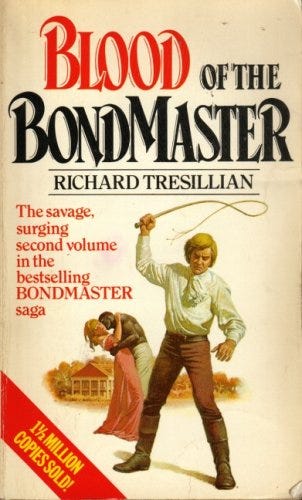
I assure you that is the least unprintable of the covers I saw... as for the content, I can't even imagine. But I think his poetry was of a more serious nature.
Seymour Stein, co-founder of Sire Records and the man who signed Madonna, the Ramones and the Talking Heads among many other major groups, passed away a few days ago. Many other groups? We're talking about the guy who is often credited with making the New York Downtown music scene what it was in the punk and post-punk days. Nor was his taste limited to a genre. Aside from Madonna he signed Cyndi Lauper and k.d. laing. The Pretenders and Barenaked Ladies. Ice-T and My Bloody Valentine. Depeche Mode and the Cure. It goes on. Madonna posted a moving he-changed-my-life tribute on Instagram. A mover and shaker whose time ran out on April 2.
There are a lot more, and a lot of web sites that track this morbid stuff, so I won't try to name them all. But note that this all follows close upon the death of folk legend Ian Tyson on December 29, 2022.
Beck, as you probably know, died from bacterial meningitis. It's one of the strangest and most virulent diseases known; it infects the brain and spinal cord directly, and you can die within hours of getting it unless treated immediately with antibiotics - which rarely happens, since who the hell would expect this? After that, the only way to save the victim is amputation of limbs. Imagine being a doctor with a barely conscious patient who happens to be one of the greatest guitarists in the world, and having to make the decision whether to try saving him by amputating an arm! I can imagine telling the family that death would be more dignified, especially at age 78, and knowing that even if he survived the disease can produce long term cognitive impairment, paralysis and other nasty stuff.
More than just the quick onset and fatality rate of up to 50% sets this disease apart. It seems that of every 100 people infected, 99 don't know it and have no symptoms. When one of them happens to exchange germs with the unlucky person who is susceptible, tragedy quickly follows. There's a vaccine (MenB), which few people get, and it's far from 100% effective. There is one common precaution, though, which I've repeated to my children ad nauseum: never, ever drink from a water bottle, or rinsing cup, or any deep vessel that is not thoroughly washed regularly with a bottle brush. Bacterial meningitis is sometimes called the "college student's disease": teens live in dorms, where they share all sorts of things, on which I need not elaborate. They may also be more susceptible at that age for some reason. Many colleges offer the vaccine for this reason. Beck, however, may have contracted it due to another risk factor: he suffered a head injury in 1969, and the bacteria can apparently enter that way too. All in all, it's one of those things like botulism, flesh-eating bacteria and prions that we should be really glad are as rare as they are. Sad to see Beck go that way, though.
Given the lifestyles of many rock musicians it's amazing that so many of the biggest names in rock music have survived not only diseases like that but Hepatitis C, AIDS and COVID-19, as well as drugs, alcohol, motorcycle accidents, plane crashes, electrical hazards and murder attempts. Many of those who did are cruising into their 9th decade. Let's hear it for the survivors:
More white hair than white rabbit these days, Grace Slick, born the year the Great Depression ended, tops the list of rocktogenarians at 83. Her last solo album was the 1984 release Software, though she collaborated as late as 2010 with songwriter Michelle Mangione. If that makes you believe in miracles, Smokey Robinson, also 83, is set to drop his first album in a decade this month (April 2023).
Ringo's still kickin' it out at 82. Bob Dylan, Paul Simon and Graham Nash are in the old folkies' home at 81, Simon having announced his retirement a few years ago, while Dylan, rarely at a loss for words, doesn't seem to have "retirement" in his vocabulary. At an age where many are facing confusion, John McLaughlin, also 81, is still playing fusion; his last release was Liberation Time, in 2021. At 80 Paul McCartney and Brian Wilson still haven't agreed on who gets more credit for influencing the other. Mick Jagger, Roger Waters and Joni Mitchell will hit 80 this year. Roger Daltry, who just turned 79, no longer hopes to die before he gets old. If he did, Jimmy Page would have something to say about it, being the same age. There's a long list of VIP's going down from there: 78 (Ray Davies), 77 (Pete Townshend), 76 (Patti Smith) etc.. I mean, Iggy Pop is 75, how did that happen?
Ever Wonder about Little Stevie? He already had some hits in the early 60's, so he must be way up there, right? Well, Stevland Hardaway Morris became "Little Stevie Wonder" when he was signed to Motown at age eleven (11). In 1963, at 13, he had his first #1 hit ("Fingertips"). At 15 or 16 he wrote the music to the Smokey Robinson hit "The Tears of a Clown" and co-wrote "Uptight (Everything's Alright)"; at 19 he co-wrote "My Cherie Amour" and wrote "Signed Sealed Delivered". His famous series of progressive soul albums from Innervisions to Songs in the Key of Life was completed by the time he was 26. (At that age I was making demo tapes with my unknown band in a Soho basement.) The man was born in 1950, already famous in the 1960's, and is now a spry 72, with hopefully many years to go. He has not, however, released a solo album in 18 years, though he collaborated on several singles in 2020.
Most of the other classic folk, rock and soul stars you can think of - the ones who have survived this far - are in their early to mid-70's. Come to think of it, I'm not getting any younger myself, so let's think positive and rephrase some of those old anthems:
Hope I don't die before I get old(er)!
LONG LIVE ROCK stars, and wannabes... (and fans)!
Hey, hey, my, my, who said rock stars have to die?
And when I die, and when I'm gone, think I'll just keep strumming and write another song...
Anyway, if you happen to see some gently aging person walking down the street and you think he or she might have once been a member of The Dave Clark Five, The Troggs or maybe the Chad Mitchell Trio, don't just pass them by and stare - say...
As one who has (perhaps morosely) kept an annual chronological list of the names of celebs who have died, I have a rare (if not unique) perspective here. Before I go into that, I will simply say that since our musical heroes were in their teens and 20s (and maybe early 30s) when we were growing up (in our tweens, teens and young adulthood), it is not surprising that it would seem that there is an acceleration of the deaths of those heroes, since WE are now in our 60s, and they are still 20 or 25 years (and more) older than us. (Though, as you point out, plenty of them remain spry and active into their 80s, including two Beatles, two Stones, and a few others.)
However, if we look solely at those who died by this time (mid-April) each year in your parameter (i.e., 2016-2023), what we find is that the "acceleration" of the deaths of those heroes is not strictly "linear"; some years are worse than others. That said, the longer trend (say, from 2010 forward) does show a clear rise overall. Keep in mind that these are only the most well-known people in each year; like you, I did not include MANY others who made important contributions to music, but are not particularly well-known. And again, these lists are only up to mid-April of each year:
2017: Butch Trucks, John Wetton, Al Jarreau, Clyde Stubblefield, Larry Coryell, Dave Valentin, Joni Sledge, James Cotton, Chuck Berry, Arthur Blythe, David Peel, J. Geils, Allan Holdsworth
2018: Ray Thomas, Dolores O'Riordan, Edwin Hawkins, Hugh Masekela, Vic Damone, Russ Solomon, Cecil Taylor, Yvonne Staples
2019: Kaye Ballard, Michel Legrand, James Ingram, Peter Tork, Andre Previn, Hal Blaine, Dick Dale,
2020 (a particularly harsh year): Neil Peart, Jimmy Heath, Claudio Roditi, Peter Serkin, Andy Gill, Joseph Shabalala, Buzzy Linhart, McCoy Tyner, Eric Weissberg, Krzysztof Penderecki, Ellis Marsalis, Bucky Pizzarelli, Bill Withers, John Prine, Merle Haggard, Lee Konitz, Jimmy Webb
2021: Gerry Marsden, Sylvain Sylvain, Phil Spector, Junior Mance, Mary Wilson, Chick Corea, Johnny Pacheco, Bunny Wailer, DMX.
2022 (a comparatively "light" year): Ronnie Spector, Meat Loaf, George Crumb, Ian McDonald, Taylor Hawkins, Bobby Rydell.
2016 WAS a particularly bad year, not least based on the "fame" of those who passed. And I think 2023 seems particularly bad not because of the number of people who have passed already, but also because of their fame.
Finally, unless I read too quickly (and missed it), I am surprised that you forgot that two of the three members of Yellow Magic Orchestra died within weeks of each other early this year: Yukihiro Takahashi and Ryuichi Sakamoto. Their contribution to electronica (along with Tangerine Dream, Vangelis, and a few others) cannot be overemphasized.
As always, though, an interesting and well-thought-out piece!